Fence line geometry and traffic patterns
Perimeters around industrial sites and logistics yards often run near dock doors, utility corridors, and staging lanes. A fence that looks clean on a plan can choke lift traffic in practice. Map where forklifts, scissor lifts, and booms turn or extend, then position barricades to protect those arcs without trapping equipment. For elevated sign or facade work, review reach needs at /aerial-lift-rental/ and /articulating-boom-lift-rental/.
Red clay, rainfall, and footing
In Northwest Louisiana, saturated clay can undermine panel bases and barricade feet. After rain, topsoil stiffens while the layer beneath stays slick, so site-stability factors and base dimensions matter. On slopes or shoulders near roadwork, plan for water shedding and keep fence feet out of rut lines where service trucks track.
Sightlines, lighting, and interior conflict
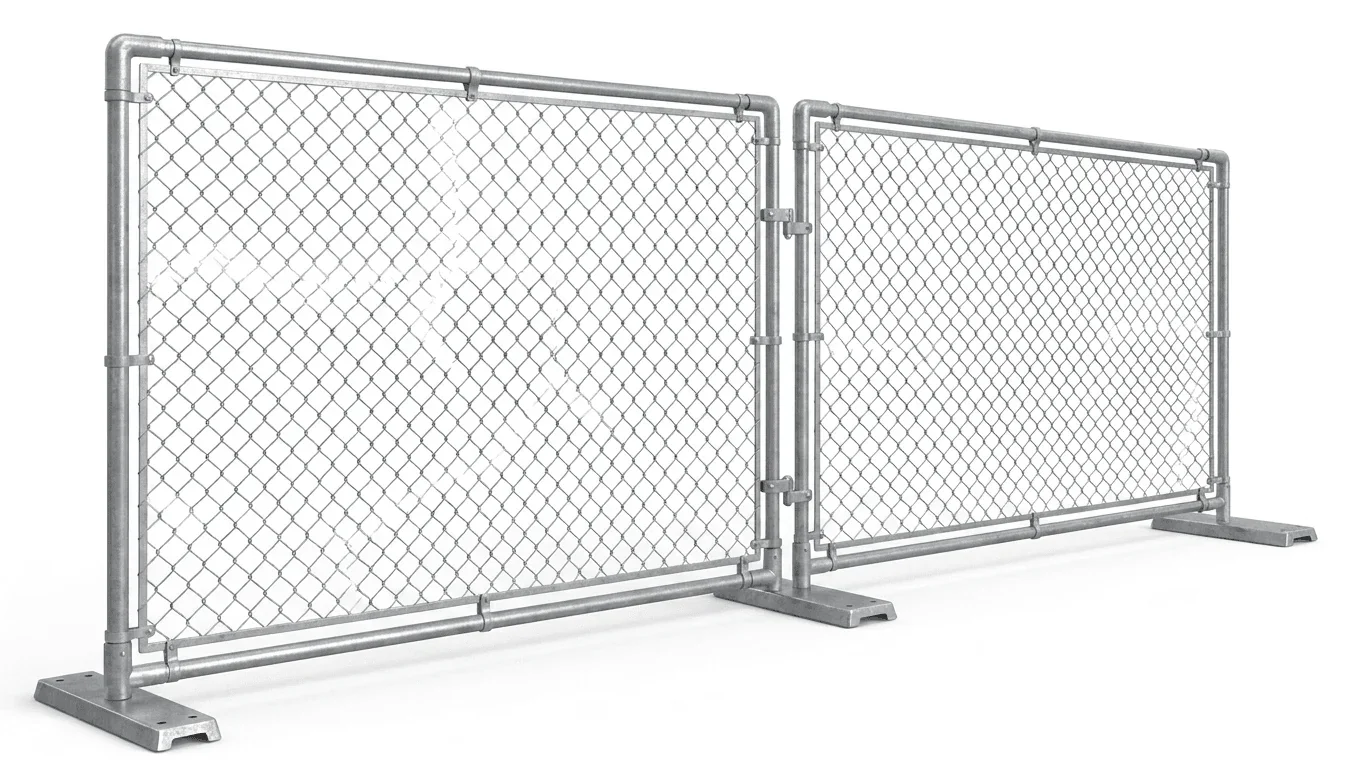
Inside large buildings, temporary barricades separate active lift aisles from pedestrian zones. Sightlines around high racks and corners improve when barricades avoid tight zigzags and leave room for mirror placement and tower lighting. If night work is planned, ensure light tower placement does not cast glare into driver sightlines. Compare options at /generators-light-towers-rental/.
Access points and emergency swing
Every closed perimeter needs defined gates sized for the largest equipment expected—often a telehandler or delivery truck. Gate placement near slopes or soft shoulders can lead to binding after storms. Check that an emergency swing or alternate opening exists if the main path floods or ruts.
Quick constraints that narrow the choice
- Ground bearing along the entire fence run
- Intersections with lift aisles and boom swing radii
- Drainage patterns after heavy rain
- Required gate widths and turnaround space
- Night visibility and glare control
Actual site conditions, the selected unit’s instructions, and site procedures govern final layout.