Start with the geometry
- Can the machine sit directly below the task, or does nearby equipment force offset placement?
- What is the required platform height versus ceiling obstructions like lighting, sprinklers, or conveyors?
- How much room exists to enter the work zone—standard doorways, freight doors, or narrow aisles?
Indoor logistics buildings around Shreveport often involve long aisles, polished slabs, and sensitive automation. That favors compact electric scissor lifts with non-marking tires and tight turning radii. For high-bay maintenance, platform capacity and stable reach matter, especially when tools and parts share the deck.
Local conditions that change the decision
- Humid, rainy periods can introduce moisture to electrical components and sensors on electric units when staging in non‑climate‑controlled spaces.
- Red clay soils tend to slick up and rut after storms, pushing outdoor work toward rough‑terrain scissor lifts with aggressive tires and higher ground clearance.
- Transportation work around major corridors may require roadside shoulder stability and predictable grade handling.
Narrow by measurements and constraints
- Working height and clear platform height needed under ductwork or conveyors.
- Floor rating and turning room: slab thickness, aisle width, and door clearances.
- Surface firmness: polished concrete vs. uncompacted fill or wet clay.
- Power source requirements: battery charging access indoors; diesel or dual‑fuel outdoors.
Related aerial options
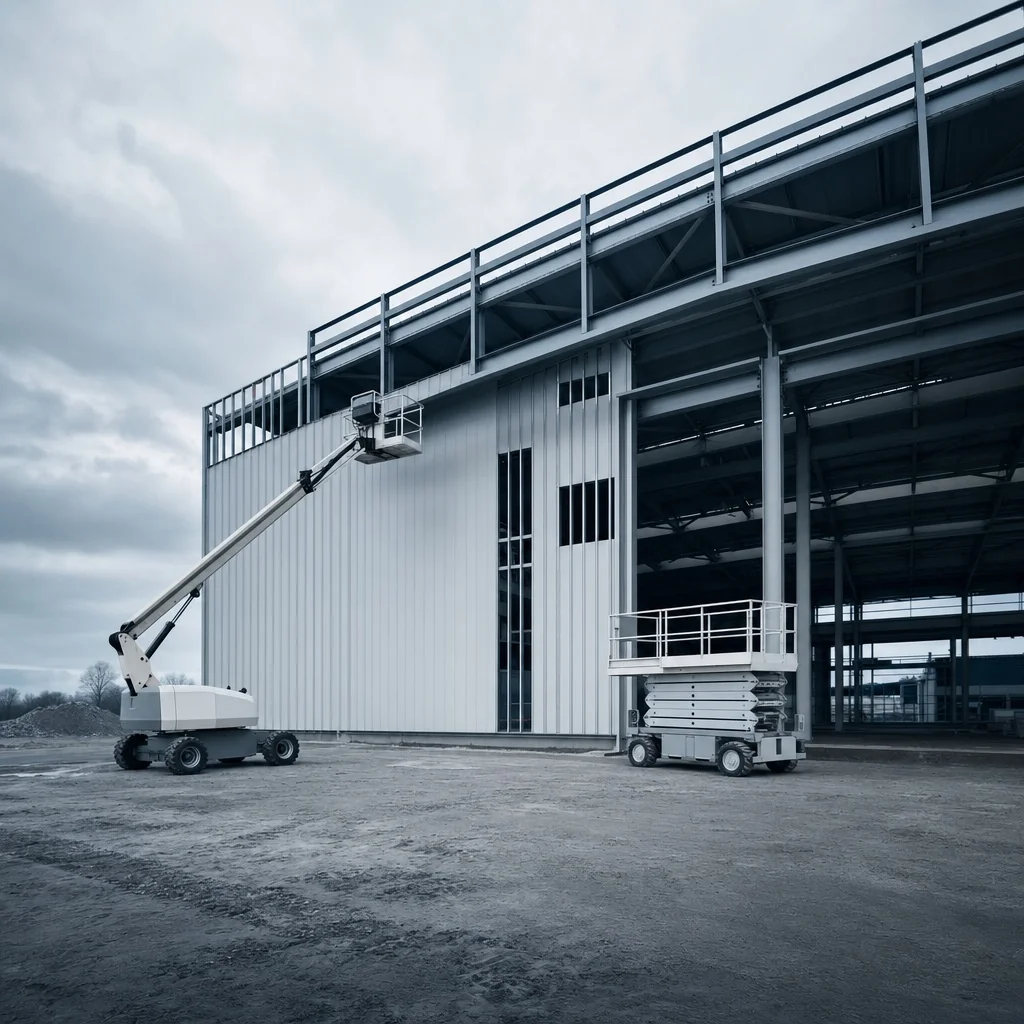
Some tasks exceed straight‑up reach or need to up‑and‑over around conveyors or pipe racks. In those cases, a boom lift may be more efficient than a tall scissor platform.
- Compare indoor slab lifts: /electric-scissor-lift-rental/
- For red‑clay and unfinished sites: /rough-terrain-scissor-lift-rental/
- Explore all aerial categories: /aerial-lift-rental/
- Need outreach beyond vertical: /boom-lift-rental/
On‑site realities
Exterior and elevated work depends on actual ground conditions, weather, the selected unit’s instructions, and site procedures. Plan staging, charging or fueling, and transport paths so the lift can reach the work without unexpected slope or soft‑soil surprises.