Start with run time, load, and where the unit can sit
Power demand and location narrow options quickly. In large local distribution buildings and industrial sites, long cord runs can tempt oversizing. Voltage drop over distance and aisle constraints favor placing the generator closer to the load—if ventilation and access are acceptable. Outdoors, red-clay surfaces that turn slick after rain call for towable units with stable stance and adequate ground clearance.
- Define the continuous and peak wattage, then check whether the load is motor-heavy or mostly electronics.
- Note if the machine must remain outside and feed power inside through dock doors, or if a smaller unit can sit under a canopy with proper exhaust routing.
Humidity, electronics, and emissions indoors
Shreveport’s humid subtropical climate affects both power and light planning. Moisture can condense on cabling and connections during temperature swings in non‑climate‑controlled interiors. For lighting inside high-bay racking or around automation, consider tower options that minimize heat and exhaust near sensors. Electric scissor lifts working nearby also change spacing; leave clear travel lanes and charging locations. See indoor reach options at /electric-scissor-lift-rental/ and /vertical-mast-lift-rental/.
Light towers: beam height, spread, and footing
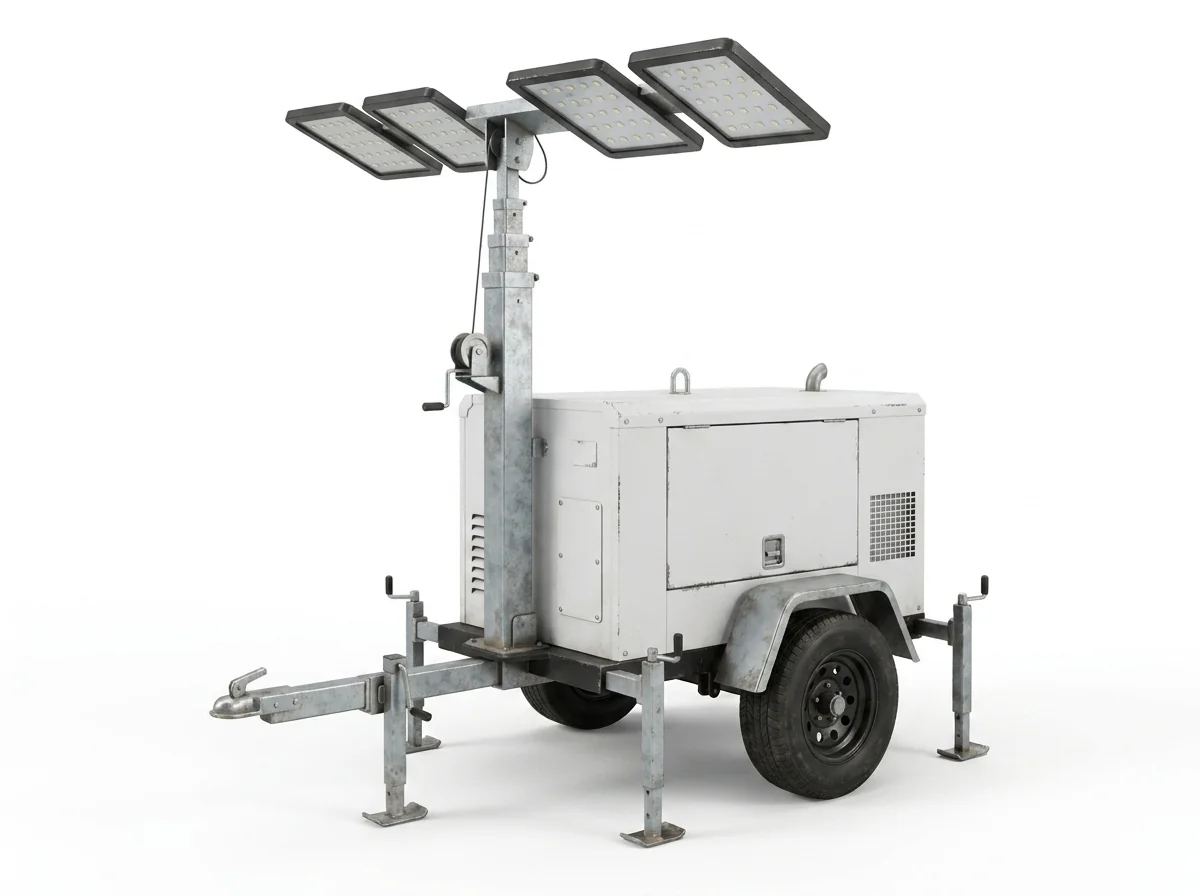
Outdoors along busy corridors and site perimeters, the question is whether the tower can stand where the beam pattern covers the task without spill into traffic-sensitive areas. Clay-based soils can crust on top and shear underneath, so stance and outrigger pad bearing matter, especially after rain. For long perimeters, link tower spacing to the required lux levels and avoid placing units where service trucks can’t turn around after a storm.
Access route and refueling pattern
Generators and towers that appear right on paper can fail on approach. Measure gate widths, turning radii, and any dock lip or curb. If the site runs extended shifts, plan refueling windows that won’t conflict with lift traffic. Where booms or rough‑terrain scissors are staging, keep towers out of their swing and tire wash. Compare outdoor aerial options at /rough-terrain-scissor-lift-rental/ and /boom-lift-rental/.
Quick constraints that narrow the choice
- Indoor vs. outdoor placement and ventilation tolerance
- Soft ground risk from recent rainfall and clay subgrade
- Required run time between refuels or battery swaps
- Beam height needed to clear stacked inventory or temporary fencing
- Cable path, cord protection, and dock or doorway pinch points
Actual site conditions, the selected unit’s instructions, and your site procedures govern final placement and use.