Start with job geometry
- Can the machine sit below the task or must it reach over obstacles?
- Is the work straight up-and-down or offset over racking, conveyors, or canopies?
- How wide and smooth are the approach lanes, and what are the turning limits?
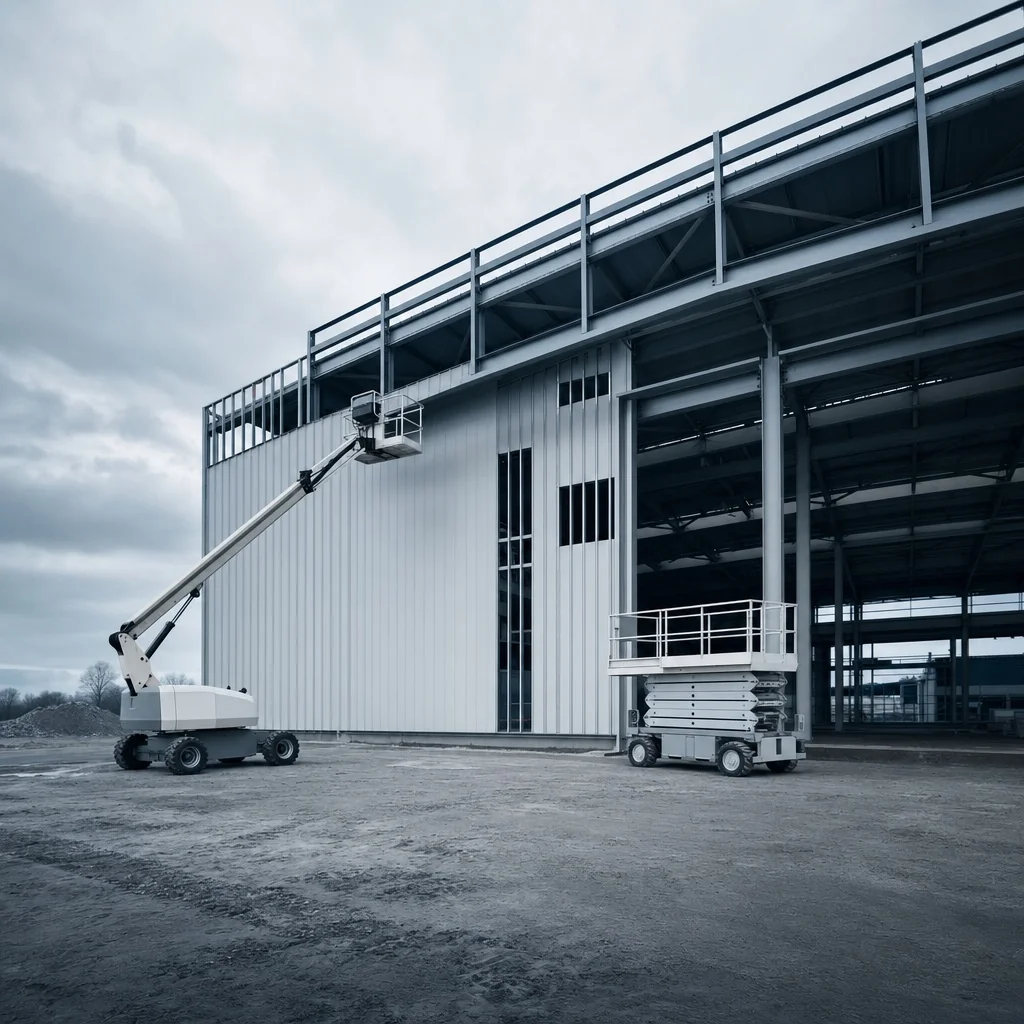
These answers steer you toward vertical lifts and electric scissors for tight, clean interiors, or toward booms and rough‑terrain units for offsets and uneven ground.
Shreveport conditions that change the comparison
- Humid interiors and high-bay aisles favor electric machines with compact footprints and non‑marking tires.
- Red clay and seasonal rain push outdoor choices toward rough‑terrain platforms and telehandlers with better ground clearance and stance.
- Logistics corridors and ongoing infrastructure work create mixed-use sites where interior and exterior equipment operate side by side. Keep routes distinct and plan laydown that doesn’t trap service vehicles.
Category overview
- Electric scissor lifts: Best when the platform can sit under the task with straight vertical reach in clean aisles. See /electric-scissor-lift-rental/.
- Vertical mast lifts: Very tight turns and light loads near sensitive equipment. See /vertical-mast-lift-rental/.
- Rough-terrain scissors: Wider decks and grade handling for outdoor slab work. See /rough-terrain-scissor-lift-rental/.
- Articulating boom lifts: Up-and-over reach for facades, signage, and obstacles. See /articulating-boom-lift-rental/.
- Telescopic boom lifts: Long, direct reach where the base can sit farther back. See /telescopic-boom-lift-rental/.
- Forklifts: Pallet and dock flow inside finished floors. See /forklift-rental/.
- Telehandlers: Outdoor staging, elevation of materials to floors or roofs. See /telehandler-rental/.
- Generators and light towers: Power and visibility for mixed shifts and remote corners. See /generators-light-towers-rental/.
- Storage containers: Secure staging that respects clay soils and turning space. See /storage-containers-rental/.
- Temporary fencing and barricades: Perimeter and aisle control that survives post‑rain movement. See /temporary-fencing-barricades-rental/.
Decision filters that save time
- Height and outreach vs. aisle width
- Floor load vs. deck size and material weight
- Surface stability after rain
- Power and lighting for night or off-shift work
- Perimeter and storage that don’t block equipment arcs
Actual conditions, the selected unit’s instructions, and site procedures govern work at height and exterior setups.